
Graphical Abstract Guidelines for Top Journals (Cell, Nature, ACS, BMJ & More)
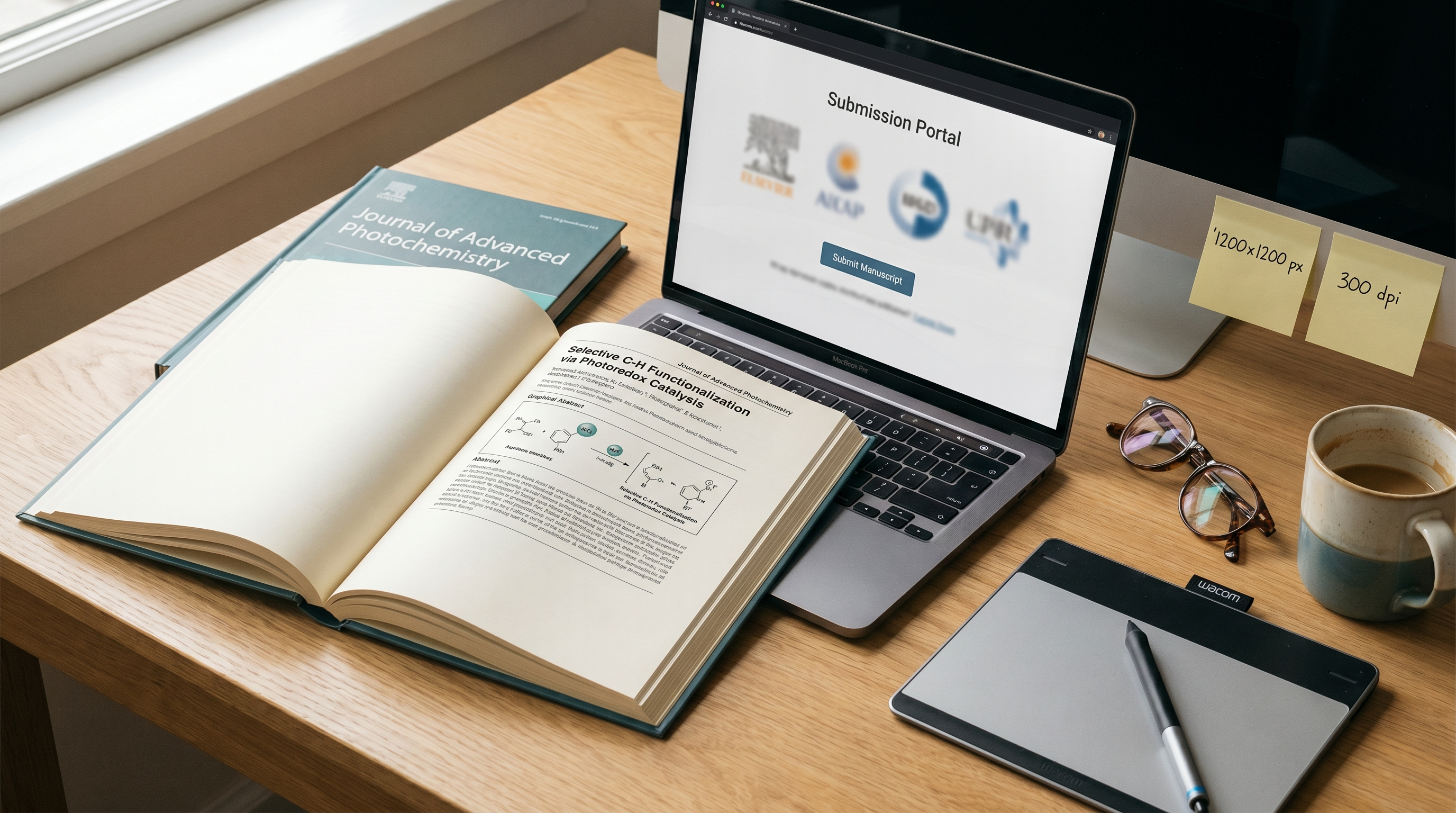
If you're about to submit a paper, the cell press graphical abstract guidelines are easy enough to find — but you'll quickly notice every other journal has its own. Cell wants a 1200 × 1200 px square. ACS wants a 3.25 × 1.75 inch landscape. Wiley wants 12.7 × 5 cm. Science doesn't allow one at all. BMJ makes its own. There's no single source that lays this out side by side, so authors waste an afternoon chasing PDFs across publisher sites. This guide does that for you across ten of the most-cited journals, with the exact dimensions, fonts, file formats, and the rejection traps editors actually flag. (For a primer on what a graphical abstract is in general, start there first.)
Stop checking ten author-guideline PDFs. GAabstract auto-formats your graphical abstract to the exact dimensions Cell, ACS, Nature, and Wiley require — no rescaling, no surprises at submission. Try it free → Templates cover every journal listed below.
Quick Comparison: Graphical Abstract Requirements at 10 Top Journals
| Journal (Family) | Required? | Dimensions | DPI | File Format | Font | Notes |
|---|---|---|---|---|---|---|
| Cell (Cell Press) | Yes | 1200 × 1200 px (square) | 300 | TIFF, JPEG, PDF | Arial 12–16 pt | Must be distinct from manuscript figures |
| Cell Reports | Yes | 1200 × 1200 px (square) | 300 | TIFF, EPS, PDF | Arial 12 pt min | Treated as a poster, not a figure |
| Cell Metabolism | Optional | 1200 × 1200 px (square) | 300 | TIFF, JPEG, PDF | Arial 12 pt | Same Cell Press spec applies |
| Cancer Cell | Optional | 1200 × 1200 px (square) | 300 | TIFF, JPEG, PDF | Arial 12 pt | Encouraged but not mandatory |
| Nature Chemistry | Yes | 90 × 50 mm | 300 | TIFF, EPS | Standard sans-serif | One of only two Nature journals using GAs |
| Nature Chemical Biology | Yes | 90 × 50 mm | 300 | TIFF, EPS | Standard sans-serif | Same format as Nature Chemistry |
| Science (AAAS) | Not allowed | — | — | — | — | Only a text "Teaser" is permitted |
| ACS (JACS, ACS Nano, JAFC) | Yes | 3.25 × 1.75 in (8.25 × 4.45 cm) | 300 color / 1200 b&w | TIFF or EPS (RGB) | Helvetica 8 pt min | Called "TOC graphic"; must be 100% original |
| Advanced Materials (Wiley) | Yes | 12.7 × 5 cm (landscape) | 300 | TIFF, EPS | Helvetica/Arial 6–8 pt | Exact dimensions enforced by submission system |
| Acta Materialia (Elsevier) | Yes | 1328 × 531 px min (5:2) | 300 | TIFF, EPS, PDF | Times/Arial | Standard Elsevier format |
| Food Chemistry (Elsevier) | Yes | 1328 × 531 px min (5:2) | 300 | TIFF, EPS, PDF | Times/Arial | Same as Acta Materialia |
| BMJ | Authors don't submit | 1024 × 1024 px | — | — | — | BMJ's editorial team produces them in-house |
If you only need the numbers, you can stop here. If you want to understand the rules behind them — and the rejection patterns editors quietly enforce — the journal-by-journal sections below cover everything authors typically discover too late.
Cell Press Graphical Abstract Guidelines (Cell, Cell Reports, Cell Metabolism, Cancer Cell)
Cell Press uses one consistent specification across the family. Every graphical abstract is a single-panel 1200 × 1200 px square at 300 DPI, saved as TIFF, JPEG, or PDF. Text must be Arial, ideally 12–16 pt. The image should read from top to bottom or left to right, and it must show the new findings from the current paper — not background, not the experimental system, and not a re-used figure from the manuscript body.
Two practical points editors flag during desk review:
- The graphical abstract has to stand alone. If a reader doesn't get the take-home message in five seconds, the abstract isn't doing its job.
- Heavily saturated primary colors look amateurish at thumbnail size. Cell explicitly recommends restraint.
Cell Reports, Cell Metabolism, and Cancer Cell follow the same square format. The difference is requirement status: Cell Reports requires one, while Cell Metabolism and Cancer Cell list them as optional but encouraged. If you're submitting to the optional journals and skip the graphical abstract, your paper still reaches review — but it loses the social-media and table-of-contents real estate that papers with one get.
The graphical abstract is uploaded as a separate file during final submission. Full official spec sheet: Cell Press figure guidelines.
Nature Family: Only Nature Chemistry & Nature Chemical Biology Use Them
A common mistake: assuming "Nature wants a graphical abstract because every top journal does." Most of the Nature portfolio doesn't use them at all. Nature, Nature Communications, Nature Methods, and the bulk of Nature Portfolio journals don't accept graphical abstracts in any form.
The two exceptions are Nature Chemistry and Nature Chemical Biology. Both require a TOC image sized to fit a 90 × 50 mm rectangle (9 × 5 cm) at 300 DPI, supplied as TIFF or EPS, with a white background and minimal text. Don't include the title or the words "graphical abstract" inside the image — those are added by the typesetter.
If your target is somewhere else in the Nature family, check the journal's specific author guidelines, but most likely you won't need one. See Nature's author resources for journal-specific rules.
Science (AAAS): Graphical Abstracts Are Not Allowed
Don't make one. Science and Science Advances explicitly prohibit graphic representations of the abstract. The journal accepts only a short text Teaser (one or two sentences pitched at non-specialist readers). Authors coming from chemistry or life-science journals routinely waste effort drafting a graphical abstract before realizing it can't be uploaded.
If you're targeting Science, redirect that effort into the Teaser — it's what gets displayed on the table of contents and in editorial summaries. Reference: Science instructions for preparing an initial manuscript.
ACS Journals: The TOC Graphic Standard
ACS calls it a TOC graphic, not a graphical abstract. The naming matters because the rules are stricter than at most journals. The same spec covers JACS, ACS Nano, Journal of Agricultural and Food Chemistry (JAFC), Analytical Chemistry, ACS Energy Letters, and the rest of the ACS portfolio:
- Size: 3.25 × 1.75 inches (8.25 × 4.45 cm) — landscape rectangle
- Resolution: 300 DPI for color, 1200 DPI for black and white
- Format: TIFF (saved at the actual print size) or EPS in RGB color mode with fonts converted to outlines
- Font: Sans-serif such as Helvetica, 8 pt preferred, 6 pt absolute minimum
- Label: Mark it "For Table of Contents Only" and place it on the last page of the manuscript file (and/or upload as a separate "Graphics for manuscript" file)
Three ACS-specific content rules trip up authors:
- It must be entirely original. No re-used journal figures, no stock illustrations.
- No photographs or caricatures of people, living or deceased.
- No company logos, products, postage stamps, or currency from any country.
Journal of Agricultural and Food Chemistry (JAFC) Requirements
On top of the standard ACS TOC graphic, JAFC (journal of agricultural and food chemistry graphical abstract requirements searches land here) asks for a 50-word TOC synopsis in text form, which most other ACS journals don't. Skipping it triggers an editorial back-and-forth before peer review even starts. The image spec is the same 3.25 × 1.75 in landscape, 300 DPI minimum, TIFF or EPS in RGB, but the dual deliverable (image + 50-word synopsis) is the JAFC-specific catch.
Source: ACS Guidelines for Table of Contents/Abstract Graphics (PDF).
BMJ: Visual Abstracts Are Made FOR You, Not BY You
BMJ does use graphical abstracts — they call them visual abstracts — but authors don't submit them. Since March 2018, BMJ's in-house editorial and design team has produced visual abstracts for selected papers, sized at 1024 × 1024 px for social-media distribution. The decision about which papers get one is editorial, not author-driven.
What this means in practice: if you're submitting to BMJ, don't spend time mocking up a visual abstract for the submission portal. Focus on the structured abstract, the Highlights box, and the data sharing statement. If your paper is selected for a visual abstract after acceptance, the BMJ team will contact you to verify the science behind their design. Reference: BMJ Visual Abstracts.
Wiley Advanced Materials Family: The 12.7 × 5 cm Landscape Banner
Advanced Materials, Advanced Functional Materials, Advanced Science, and the rest of the Wiley Advanced series all use the same banner format: 12.7 cm wide × 5 cm tall, at 300 DPI, supplied as TIFF or EPS with Helvetica or Arial at 6–8 pt minimum.
Two things to watch:
- Exact dimensions are enforced. The submission system rejects images that aren't 12.7 × 5 cm. A graphic that worked perfectly for ACS at 3.25 × 1.75 inches (a similar shape but smaller and with a different aspect ratio of 1.86:1 vs Wiley's 2.54:1) will fail Wiley validation.
- You also need a 50-word descriptive caption that runs alongside the image on the journal page.
The dimensions look similar to ACS at first glance, but they're not interchangeable. This is the single most common cause of "please re-export your graphic" delays during Wiley submission. Reference: Advanced Materials author guidelines.
Elsevier Journals: The 1328 × 531 px Standard (Acta Materialia, Food Chemistry, JMS)
Elsevier uses one specification across most of its catalog, including Acta Materialia, Food Chemistry, Journal of Membrane Science, Carbon, Tetrahedron, and thousands more. Minimum dimensions are 1328 × 531 px (a 5:2 landscape ratio), at 300 DPI, supplied as TIFF, EPS, PDF, or MS Office files. Approved fonts are Times, Arial, Courier, or Symbol — font size large enough to remain readable when the graphic is scaled down to a 500 × 200 px display on ScienceDirect.
A few editorial rules apply across Elsevier journals:
- Don't include the words "graphical abstract" inside the image.
- No supplementary text beyond what's already in the image.
- Upload as a separate file in the online submission system, not embedded in the manuscript.
Reference: Elsevier graphical abstract guidelines.
Common Desk-Rejection Reasons Across Journals
Across the journals above, the reasons editors push back on graphical abstracts cluster into seven patterns. Three of the four reviewers I've spoken with at Cell Press, ACS, and Wiley all named at least four of these:
- Wrong aspect ratio. A square image submitted to Wiley (which needs landscape) or a landscape image submitted to Cell Press (which needs square). The system flags this immediately or the editor asks for a re-export before peer review.
- Text unreadable at thumbnail size. Most graphical abstracts display at 200–300 px wide on the table of contents. Anything below 12 pt at the working size disappears.
- A person, company logo, postage stamp, or currency anywhere in the image. ACS rejects on this rule alone.
- Re-used figure from the manuscript body. Cell Press explicitly requires the graphical abstract to be distinct from any figure in the paper.
- Missing entirely when the journal lists it as required. Common with Cell Reports and the Wiley Advanced series.
- Resolution below 300 DPI. Anything exported from a screen-only design tool without a print-resolution setting usually lands at 72–96 DPI.
- Wrong file format. PNG is the most common offender — most top journals want TIFF or EPS, not PNG or JPEG.
The pattern across all seven: they're not artistic judgments, they're checklist failures. A 30-second pre-flight check before submission catches the majority.
Switching Journals Without Redrawing From Scratch
If your paper gets desk-rejected from one journal and you re-target another, you're often re-formatting the graphical abstract from scratch — unless you set up the source file the right way the first time.
Two practical tips:
- Keep the master file as vector art (Illustrator, Inkscape, Affinity Designer). Vector scales without quality loss, so the same source exports to Cell's 1200 × 1200 px square, Wiley's 12.7 × 5 cm banner, ACS's 3.25 × 1.75 inch landscape, or Elsevier's 1328 × 531 px without re-drawing anything.
- Design for the most restrictive layout first. If you might submit to ACS, design within their 1.86:1 landscape constraint from the start — it's easier to add margin for a square or a wider Wiley banner than to compress a tall layout into ACS's tighter rectangle.
If you'd rather skip the per-journal rescaling step entirely, a tool like GAabstract's journal-specific maker pre-fills the canvas to each journal's exact dimensions, so the export step matches submission-portal expectations. For a step-by-step walkthrough of the AI-assisted build process, see how to make a graphical abstract with AI. If you're choosing between tools, the 2026 graphical abstract maker comparison breaks down what's available.
FAQ
Is a graphical abstract required for Cell papers? Required for Cell, Cell Reports, and most Cell Press journals. Cell Metabolism and Cancer Cell list them as optional but encouraged.
Does Nature require a graphical abstract? Only Nature Chemistry and Nature Chemical Biology. The main Nature journal, Nature Communications, and most other Nature Portfolio journals don't accept them.
What's the difference between a TOC graphic and a graphical abstract? For ACS, they're the same thing. For Cell Press and Elsevier, "graphical abstract" is the main image and the "TOC graphic" is a separately scaled version for the table of contents listing.
Can I reuse a figure from my paper as the graphical abstract? No, at most journals. Cell Press explicitly requires the graphical abstract to be distinct. ACS requires it to be entirely original, unpublished artwork. Elsevier and Wiley are less strict but still expect a standalone visual.
What file format do top journals accept? TIFF and EPS are universally accepted. PDF is accepted by Cell Press and Elsevier. JPEG is accepted by Cell Press but discouraged elsewhere. PNG is rarely accepted by top journals.
Where do I upload the graphical abstract during submission? Most journals (Cell Press, Elsevier, Wiley) want it as a separate file in the online submission system. ACS asks you to place it on the last page of the manuscript file and optionally upload it as a separate graphic. BMJ doesn't ask authors at all.
The fastest path through any submission is to confirm the journal's exact specification once, before you start designing — not after the first export fails validation. Bookmark the comparison table above and keep it open in a tab while you build.
Create Your Graphical Abstract
Turn your research into a clear, shareable graphical abstract in seconds with AI.
More Posts
What Is a Graphical Abstract? Definition, Examples & Guide
Learn what graphical abstracts are, see examples from Nature & Science, and create one in minutes with AI.
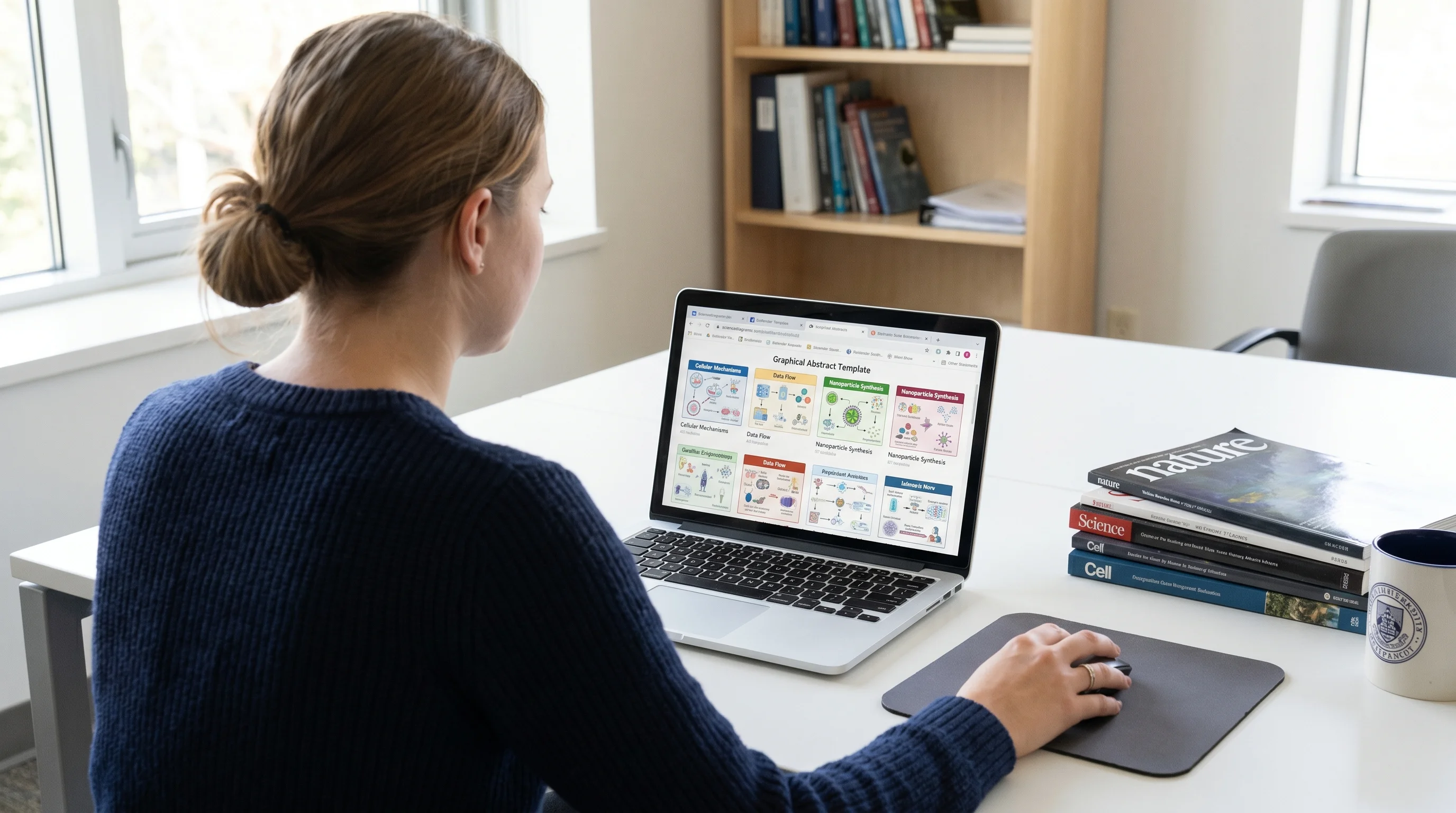
The Complete Guide to Graphical Abstract Templates (Free PPT/PDF + How to Choose for Your Journal)
Compare the 5 most-used graphical abstract templates (AATS, Elsevier, JNM, Tidbit, BioRender), see which fits your target journal, and avoid the 5 export mistakes that get figures rejected.

7 Best Graphical Abstract Makers in 2026 (Compared & Ranked)
We evaluated 7 graphical abstract makers on AI generation, editing, pricing, and journal compliance. Detailed comparison with decision tree to help researchers choose the right tool.
Newsletter
Join the community
Subscribe to our newsletter for the latest news and updates